If your workday starts with a drive to Salem, Nashua, Manchester, or Massachusetts, your home search in Windham probably feels like a balancing act. You want the right house and the right setting, but you also need a commute you can live with day after day. The good news is that Windham gives you a clear framework for weighing access, budget, and neighborhood feel. Let’s dive in.
Why commute matters in Windham
In Windham, commuting shapes home decisions because many residents travel outside town for work. The town’s 2023 Master Plan reports that about 90% of working residents commute out of town, with common job destinations including Salem, Nashua, Manchester, and Massachusetts. That means location inside Windham often matters almost as much as the home itself.
The numbers help explain why. According to the U.S. Census QuickFacts for Windham, the mean travel time to work is 30.8 minutes. That is only a little higher than Rockingham County’s 28.9 minutes, and it is close to nearby towns like Salem, Londonderry, Pelham, and Derry.
So for many buyers, Windham is not necessarily about cutting commute time in a dramatic way. Instead, it is often about deciding whether the town’s access, home styles, and overall setting are worth the premium.
Route 111 and Exit 3 drive decisions
If you are comparing locations within Windham, the road network is a major factor. The town’s 2023 Master Plan says Route 111 is the main east-west travel corridor, and only three routes cross I-93 in town: Route 111, Route 111A, and Lowell Road.
That limited set of crossings makes certain areas more practical for daily drivers. If your routine includes getting to I-93, where you live in relation to Route 111, Route 111A, Lowell Road, and Exit 3 can influence how easy your mornings and evenings feel.
The town has also continued to focus on this corridor. In a June 2025 town press release about the Route 111 Corridor Study, Windham said the study launched in 2023 to improve travel conditions and manage congestion and safety on Route 111. For buyers, that reinforces something local residents already understand: access to key travel corridors is central to everyday livability.
What buyers usually trade off
When you search in Windham, the real choice is often not simply a shorter commute versus a longer one. It is more often a tradeoff between time, price, and neighborhood character.
Commute times in southern New Hampshire are fairly similar from town to town. But home values are not. Windham’s median owner-occupied home value is $723,300, while nearby Salem is $473,300, Londonderry is $505,200, Pelham is $552,600, and Derry is $432,000, based on the same Census QuickFacts dataset.
That gap matters. If you choose Windham, you may not be buying a dramatically shorter commute. You may be choosing a specific mix of access, ownership stability, and lower-density residential character instead.
Where commute convenience stands out
Not every part of Windham feels the same when you are thinking about daily travel. Based on town planning documents, buyers who care most about commuting convenience often look closely at areas tied to Route 111, Wall Street, North Lowell Road, Route 111A, and the Village Center.
The town describes the Town Center as the approximate geographic center of Windham, located at Route 111 and North Lowell Road. The town’s ERZ designations also cluster around Wall Street and Route 111, Range Road, Route 111A, and Village Center areas, showing where local planning attention has been concentrated.
That does not mean one area is universally better than another. It means that if your priority is making day-to-day driving easier, these parts of town may deserve a closer look during your search.
How housing stock affects the choice
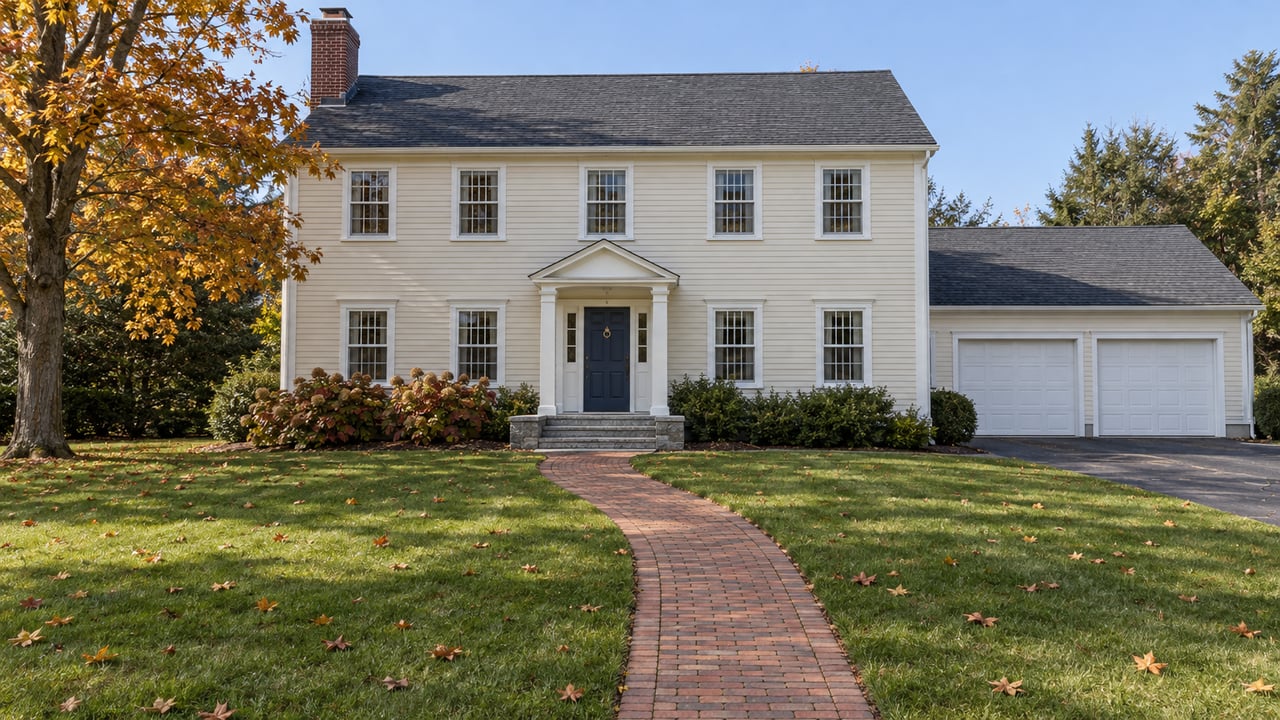
Windham’s housing profile also shapes how buyers think about commuting. The market is heavily owner-occupied, with 93.9% owner-occupied housing, and the town’s master plan says 86.6% of the housing stock is single-family and non-age-restricted. In practical terms, that means many buyers are choosing among detached homes in a market where privacy, lot size, and residential feel are important parts of the value.
That setup changes the commute conversation. In some towns, buyers may choose a condo or a more central location to save driving time. In Windham, many buyers instead decide whether a larger single-family home and quieter street justify a drive that is similar to nearby towns.
Budget is part of that equation too. The Census reports median monthly owner costs with a mortgage at $3,693, which reinforces that Windham is often a higher-commitment purchase. Buyers are usually looking at the whole lifestyle picture, not just the number of minutes in the car.
Downsizers and flexible commuters think differently
Not every buyer in Windham has the same commute lens. If you work from home part of the week, the tradeoffs may shift. The town’s master plan reports that 14% of workers work from home, while 76% drive alone and 6% carpool.
That tells you something important. Car access still matters for most households, but full-time daily commuting is not the only pattern shaping demand.
For downsizers, the conversation can also look different. The master plan notes 312 age-restricted housing units and says there is still interest in more modest retirement housing so longtime residents can downsize without leaving town. In those cases, buyers may place more value on manageable access to Route 111 and village-area conveniences than on shaving a few minutes off a peak-hour drive.
Windham versus nearby towns
If you are deciding between Windham and another southern New Hampshire town, it helps to compare commute time and price side by side.
| Town | Mean commute time | Median owner-occupied home value |
|---|---|---|
| Windham | 30.8 minutes | $723,300 |
| Salem | 29.0 minutes | $473,300 |
| Londonderry | 28.6 minutes | $505,200 |
| Pelham | 29.5 minutes | $552,600 |
| Derry | 30.9 minutes | $432,000 |
The big takeaway is simple: commute times are close, but pricing is not. That is why Windham buyers are often selecting the town for its overall residential setting and ownership profile, not just for a shorter drive to work.
How to search smarter in Windham
If commuting is one of your top priorities, it helps to evaluate homes with a clear process. Instead of asking only, "How long is the drive?" ask a few more specific questions.
Focus on your actual route
A home may look well placed on a map, but your real route matters more than straight-line distance. In Windham, access to Route 111, Route 111A, Lowell Road, and I-93 can make a meaningful difference in how your routine feels.
Match budget to priorities
Because Windham home values run higher than several nearby towns, it helps to decide what you are paying for. If you value a detached home, ownership stability, and a lower-density setting, Windham may make sense even if the commute is similar to nearby options.
Think beyond weekdays
Your commute matters, but so does your day-to-day life outside work hours. Consider how often you need easy access to regional roads, errands, and recurring appointments, especially if your schedule includes both in-office and work-from-home days.
Keep long-term flexibility in mind
Your job location may change over time. A smart Windham purchase often works not just for your current commute, but for different future patterns too, whether that means hybrid work, a Massachusetts employer, or more local travel within southern New Hampshire.
The bottom line on Windham home choices
In Windham, commuting shapes home choices because access is part of the town’s value story. With most residents working outside town, key travel corridors like Route 111 and Exit 3 play a major role in how buyers evaluate location. At the same time, the town’s higher home values show that many buyers are choosing Windham for a broader package of benefits, including a strong ownership profile and a predominantly single-family housing market.
If you are weighing Windham against nearby towns, the most helpful question is usually not, "Will this save me a lot of commute time?" It is, "Does this home give me the right balance of access, price, and everyday livability?"
If you want help comparing Windham homes through the lens of commute, budget, and long-term fit, connect with Rebecca Curran. You will get practical guidance grounded in local market knowledge and a clear understanding of how small location differences can affect your search.
FAQs
How does commuting affect where buyers look in Windham, NH?
- Buyers often focus on areas with easier access to Route 111, Route 111A, Lowell Road, and Exit 3 because these routes shape how quickly they can reach I-93 and regional job centers.
What is the average commute time for Windham, NH residents?
- According to the U.S. Census QuickFacts, Windham’s mean travel time to work is 30.8 minutes.
Are most Windham, NH residents commuting out of town for work?
- Yes. Windham’s 2023 Master Plan says about 90% of working residents commute outside town, with common destinations including Salem, Nashua, Manchester, and Massachusetts.
Is Windham, NH chosen mainly for a shorter commute?
- Not usually. Compared with nearby towns, commute times are fairly similar, so many buyers choose Windham more for its housing profile, ownership stability, and residential character.
Why are Windham, NH home prices higher than some nearby towns?
- The available data show that Windham has a much higher median owner-occupied home value than several nearby towns, while commute times remain fairly close. For many buyers, that suggests they are paying for Windham’s specific blend of access and predominantly single-family living.